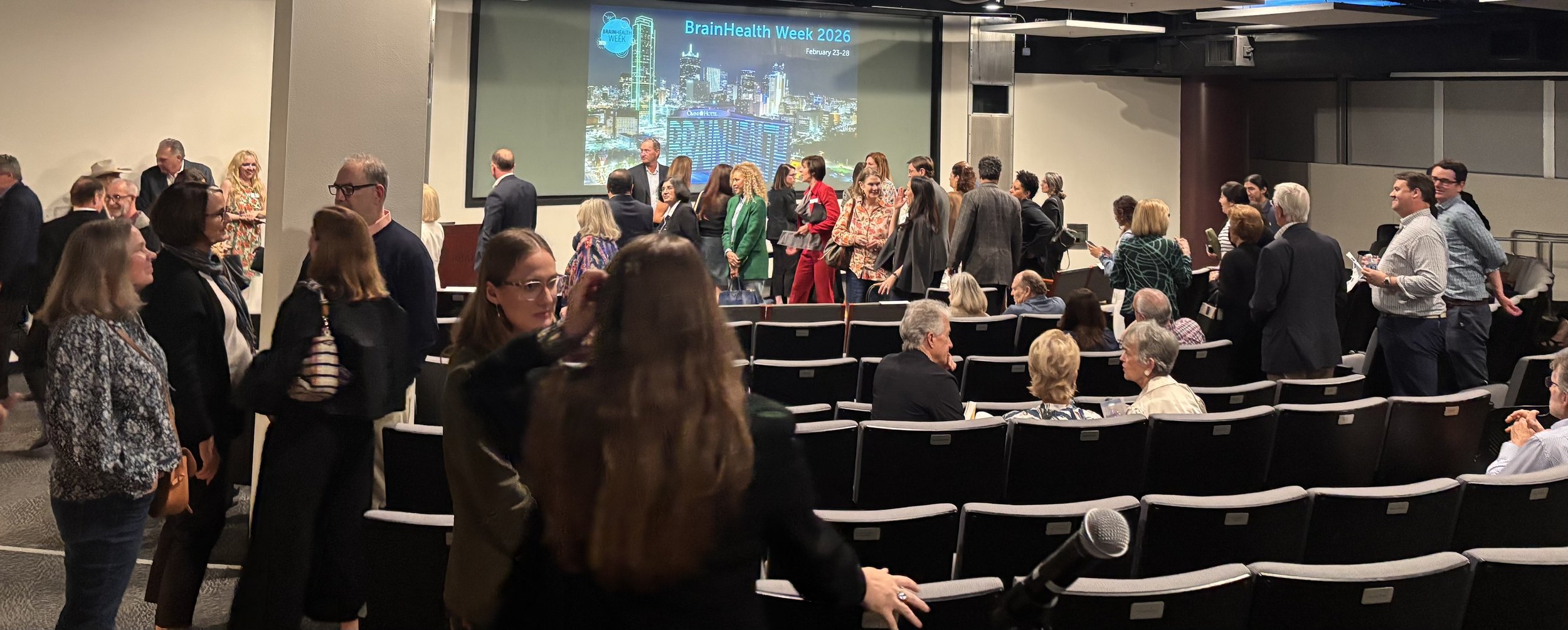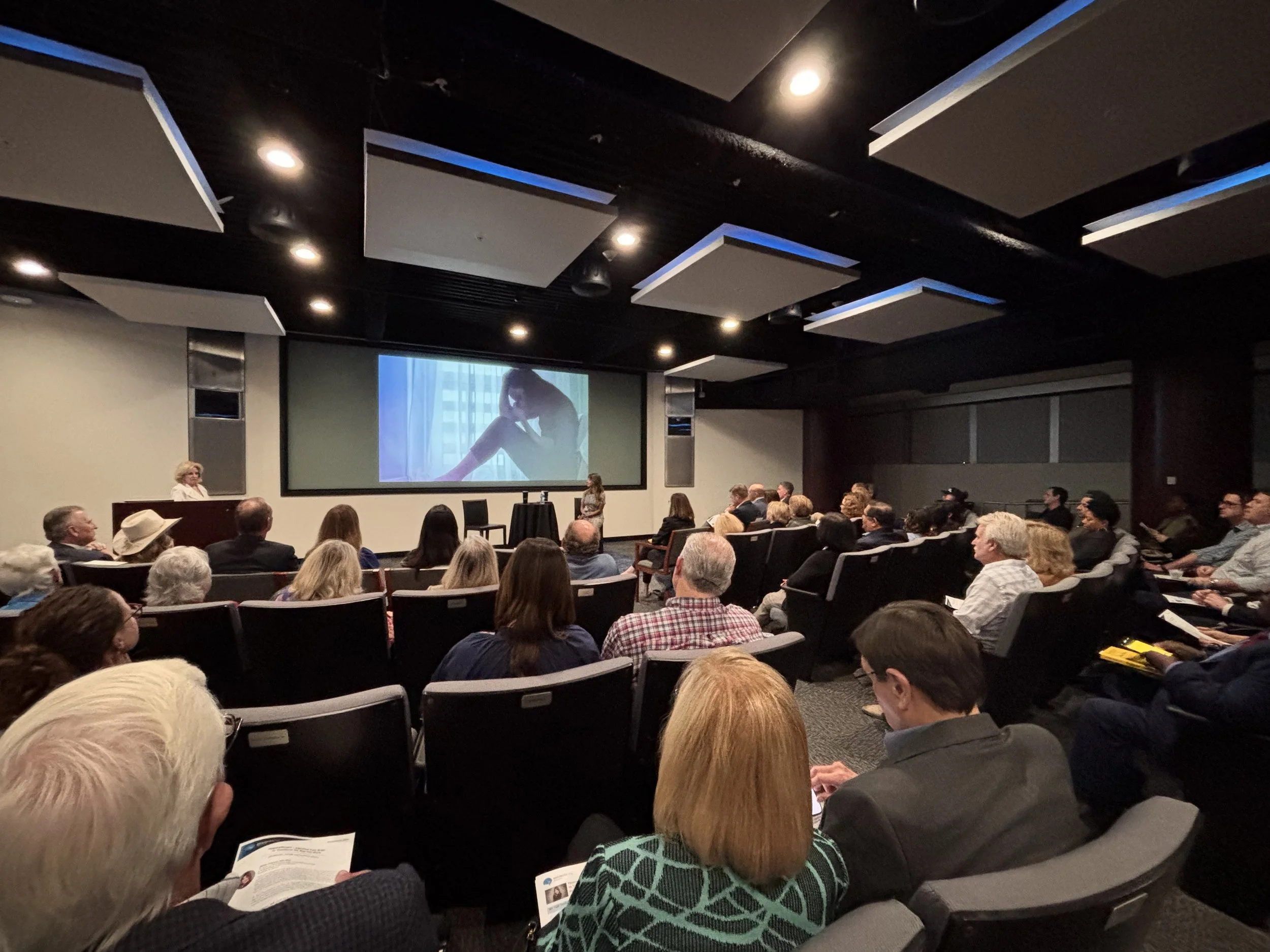
Last week, I did something wild and rebellious: I attended an event in person. As in, I drove to an actual building—the Center for BrainHealth at UT Dallas—and sat in a room with other humans (aged 20–90) who also chose not to consume knowledge through a screen. Honestly, if someone had offered wine and a string quartet, it would’ve felt like a modern-day French salon. Dallas needs more of those, and I’m dangerously close to starting one myself.
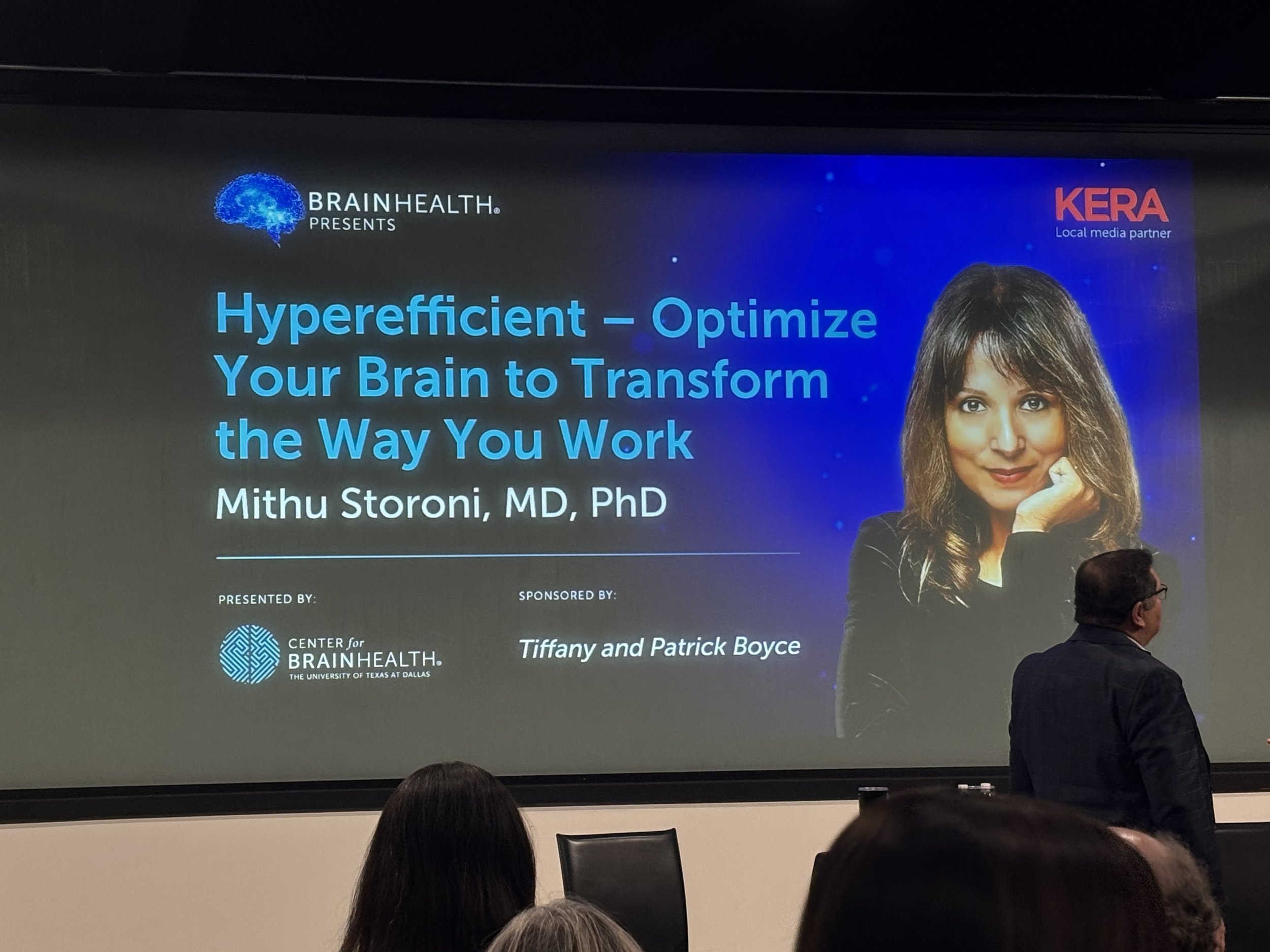
This was the fourth lecture in a four-part series, and our speaker was Dr. Mithu Storoni: physician, cognitive neuroscientist, author, and winner of the 2025 Business Book of the Year for Hyperefficient. She flew in from the UK to tell us, essentially, that most of us are using our brains like rental property. As in, they are overused, under-cared for, and somehow still expected to perform.
I walked in bracing for the usual productivity sermon. You know the vibe: hustle harder, color-code everything, sleep when you're dead.
I walked out thinking: Oh. This is actually about the brain’s rules for high-quality work.
Turns out the brain runs in three gears:
Gear 1: Awake, relaxed, borderline hammock mode.
Gear 2: Alert, connected, creative. The “flow” zone where good ideas actually come from.
Gear 3: Frazzled, context-switching, sprinting-without-seeing, where quality goes to die.
Corporate America worships Gear 3. More meetings, more channels, more everything.
But all the exceptional moments of performance, whether it’s an athletic performance, a Noble-Prize-winning discovery, or anything in-between, happen when the mind is operating in Gear 2.
She went on to explain: “We treat the brain like it’s a muscle, but it’s very different. Muscles rest when they are not working. The brain works when it rests and rests in work.”
Her point: we push our brains as if they’ll eventually hit exhaustion and bounce back like a muscle, but they don’t. The brain keeps going, even after we’ve overtaxed it, which is exactly why “just power through” leaves us depleted instead of better.
If it takes you more than 20 minutes to fall asleep at night, your brain lived in Gear 3 all day.
This was the moment the entire audience silently judged themselves. Because nothing says “stuck in the stressed gear” like scrolling social media in bed while your brain begs for mercy.
The Real Cost of Staying in the Stressed Gear
In blue-zone cultures (the places where people regularly live past 100), people work daily. Not in a climb-the-ladder way, but in a purpose-gives-me-energy way. Work and health aren’t enemies. In Gear 2, they’re dance partners. Gear 2 isn’t just where high-quality work lives. It’s where long-term health lives. I’ve learned over the years that material like this can actually stress people out. It becomes one more thing to fix or optimize or “do right.”
So to keep this practical (and not anxiety-provoking), I dug into her book and pulled out her clearest, simplest advice for getting ourselves out of Gear 3.
Environmental
Reduce noise
Use warm (red) lighting
Surround yourself with slow-moving humans (basically: avoid airports)
Body
Ten-second breaths
Focus your gaze on a narrow target
Walk away from the stress source before you do something you’ll regret
Mind
A break every 90 minutes
A walk, stretch, crossword
Let your mind wander (it’s literally clearing toxins)
She also emphasized naps. As in: put them on your calendar. A neuroscientist said it, so it’s now science-backed self-care, and I’m here for it!
So…Why Is a Business Owner Spending Time at Neuroscience Lectures?
Because it’s all connected.
Everything Dr. Storoni described matches what we know from agile, SAFe, and the modern Product Operating Model:
You can’t innovate from a stressed gear.
You can’t create strategic clarity while context-switching.
You can’t “optimize for outcomes” if you’re sprinting through output.
You can’t reach flow if your environment is hostile to thinking.
You cannot achieve innovation by cranking harder in Gear 3.
You get brilliance by intentionally designing the environment for Gear 2.
(Imagine a world where enterprises understood this. Flow metrics would finally mean something other than “how fast can we shove more into the pipe?”)
We talk about flow, cadence, WIP limits, psychological safety, and small batches in product and agile circles — and here was a neuroscientist explaining the biological reason those practices work. Which makes sitting in that lecture, in person, surrounded by curious people, feel less like “a break from work” and more like “educating myself on the science behind doing work well.”
Maybe the real hyperefficiency isn’t about doing more. Maybe it’s about finally understanding why the practices we preach…actually work.
And that’s absolutely worth leaving the house for.