
7 Things You May Be Missing in Your Product Operating Model
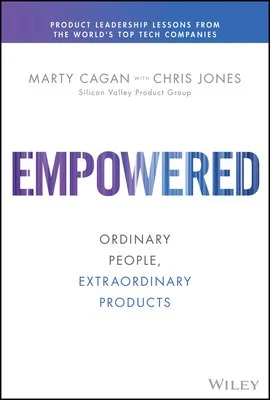
When organizations assess their Product Operating Model, they often evaluate structure, roles, funding models, and roadmaps. But after reading Empowered (alongside Transformed by Marty Cagan) I’m convinced many assessments miss what actually determines whether the empowerment of a team is real.
Here are seven signals your Product Operating Model may not be as empowered as it appears.
1. Your Product Engineers Report up to the CIO
This may indicate that the organization views technology as a cost center, a necessary cost to serve the business.
Conversely, when product engineers report up to a CTO, it’s more likely that the organization appreciates that technology is the business. It allows us to solve problems for our customers that are impossible otherwise. If product and engineering exist primarily to execute pre-defined plans, empowerment will stall no matter how modern the structure looks.
An empowered operating model starts with executives who see technology as strategic.
2. You’re Still Assigning Features Instead of Problems
Empowered teams must be given problems to solve, not features to deliver.
Empowerment means trusting teams to determine the best solutions once they clearly understand the problem. If your roadmap is a collection of stakeholder-requested outputs, your teams may be busy, but they’re not empowered.
3. You’re Not Validating Solutions Before Building Them
Empowered teams have accountability for validating solutions before they ever get built.
They actively test for value, usability, feasibility, and viability before committing significant time and engineering effort.
If validation happens after delivery, your operating model is reactive, not empowered.
4. Stakeholders Still Control What Gets Built
In a traditional model, stakeholders decide the solution and teams implement it.
In an empowered model, stakeholders no longer control what gets built. Instead, they provide context, constraints, and business insight. The product team owns discovery and solutioning.
This shift is often the most uncomfortable, yet the most necessary.
5. Coaching Isn’t Applied with Intention and Discipline
Many leaders say they coach, but few treat coaching as a structured discipline.
Applying coaching techniques with intention and discipline is where the real impact lies. Empowered teams don’t happen accidentally. Leaders assess capability gaps, create growth plans, and actively develop product managers, designers, and tech leads. They assign homework between 1-on-1’s and treat the 1-on-1 as sacred.
Capability building is not a side activity. It is the job.
6. You Have a Roadmap, but Not a Strategy
A roadmap without a product strategy will not serve you.
Strategy connects vision to execution. It defines where to play and how to win. Without it, teams default to shipping what’s next instead of solving what matters.
If your roadmap can’t clearly trace back to a product strategy, your Product Operating Model may be output-driven rather than outcome-driven.
7. Discovery Is Siloed
Tech leads—and often the entire team—must participate in discovery. Empowerment breaks down when discovery is siloed inside product or design.
Empowered teams learn together. They test assumptions together. They share accountability for risk reduction together.
When discovery becomes a handoff instead of a collaboration, empowerment quietly erodes.
The Real Test
A Product Operating Model isn’t defined by org charts or ceremonies. It’s defined by behavior:
How leaders think
How problems are framed
How solutions are validated
How strategy guides work
How intentionally people are developed
Empowerment is less about structure and more about discipline.
And that discipline is what separates teams that ship features from teams that deliver impact.