
How CES 2026 Strengthens Springbach’s Work
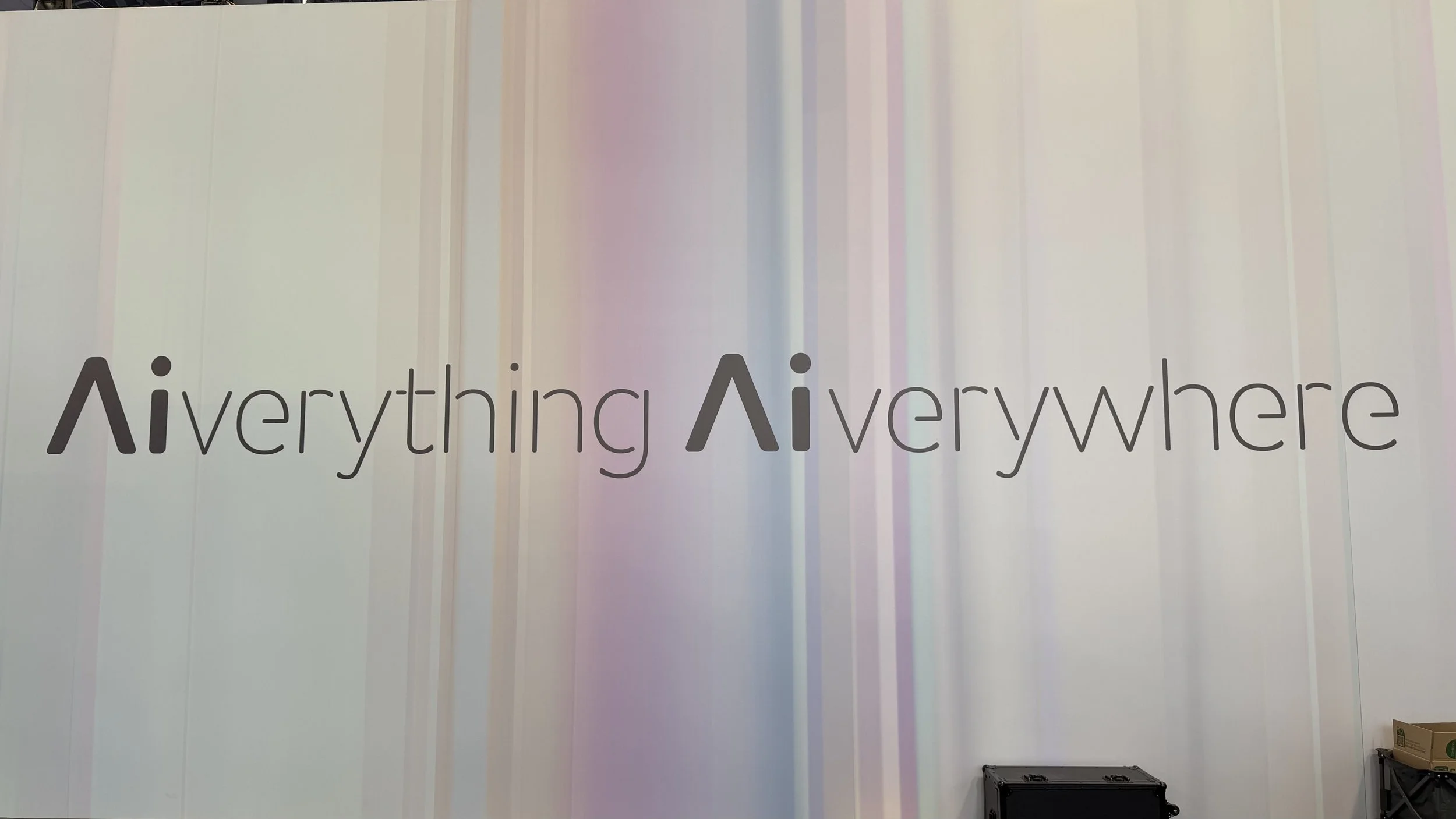
Nearly every year, I attend CES. While some of our clients attend, too, this isn’t technically related to the work we do here at Springbach. Instead, it scratches the itch for my interests in home technology. CES used to stand for the Consumer Electronics Show. And while they don’t use that meaning anymore, that’s the part that I care about the most.
Every few years, the technology on display at CES seems revolutionary. But this year was more evolutionary. And that’s not a bad thing. My overall takeaways from CES in 2026 were:
It was more about iterative improvements than huge new changes
Everyone—and I mean everyone—was talking about AI [previous em dashes intentional]
Robotics, or automation, if you will, will likely help make humans more productive
Turns out that these are common themes we deal with every day with our clients!
Iterative Improvement
Many healthy organizations seek improvement. Oftentimes, we see clients so ready for change that they’re set to burn everything down and start over. But that approach often comes with enormous cost and risk. Yes, sometimes it’s necessary. And we can help with that.
But more often than not, adjusting objectives, process, or focus can more effectively affect the desired change or improvement. We strive for continuous improvement, and we coach our clients to do the same. You don’t accomplish that efficiently by starting over every year or quarter. Instead, we work to infuse incremental, achievable changes in organizations and processes. Think iterative development, but for teams instead of software.
AI
AI is changing the landscape of our workforce and our economy. And it is changing and improving at an astronomical rate. Nearly all organizations are talking about AI and considering or implementing effective ways to leverage it. AI for AI’s sake, that is, to make marketing or executive teams happy about being “in the game,” probably isn’t going to help you in the long run. But thoughtful, effective use of AI can be a huge productivity accelerator.
We’re finding that coding assistants and other large language model (LLM) tools are helping teams prototype and build faster, generate unit tests, and even evaluate and improve requirements. Before buying into the hype that AI might save you money by reducing staffing costs, consider how much more your teams could achieve and how much better their solutions could be using these types of tools. Well implemented AI tools can increase value, output, and, ultimately, revenue!
Automation
Companies at CES demonstrated their humanoid robots doing tricks like backflips, folding shirts, or even fighting other robots. Humanoids may be the next big thing in robotics, but the real story here is automation. How can we best use technology to do the predictable, repetitive tasks we encounter?
We regularly work with clients struggling to implement automation in their ticketing, build, deployment, and testing processes. Where should they invest in automation? The real answer is everywhere. But if you’re balancing automation budgets with other key resources, it takes some strategic planning to integrate automation in a way that will best benefit your organization. Automation will ultimately save you time and money. The key is applying it appropriately for your situation.
We regularly attend conferences and workshops that pique our interests and passions. Like our Bach club, sometimes these are directly related to what we do and how we serve our clients, and sometimes they’re not. But feeding our personal interests is important, too. And oftentimes, even then, we find that we can relate what we’re seeing and learning to our offerings and our clients' needs. That was certainly the case with some of the themes on display at CES 2026.
