
Scaled Agile to Deliver
Large-Scale Salesorce Solutions at Speed
Introduction
With $15 billion in annual sales, our client is a leading provider of salty snacks. In addition to the household brands they’re known for, they’ve also embraced health-conscious products and built a culture of sustainability to ensure they are good stewards of the environment.
At the heart of their business, the value stream is simple: Make, Move, Sell. The Sales Technologies group, which engaged us, operates firmly in the Sell segment, supporting all digital solutions that drive product sales.
But supporting sales at this scale — over 30,000 front-line salespeople, digital tools for stores, and eCommerce solutions — requires a digital delivery engine that is both efficient and resilient.
Yet, this organization was struggling.
The Challenge
The Costly Failure
In 2015, the company faced a major setback: a $30 million software project was canceled after 18 months with zero functionality delivered. High defect rates, unresolved technical challenges, and an inability to detect issues early resulted in a massive financial and psychological blow. They needed a new approach — one that ensured early feedback, faster value delivery, and adaptability.
At the same time, workforce shifts were accelerating. The typical salesperson had 20–30 years of experience but was nearing retirement, while younger candidates weren’t interested in traditional roles. The rise of the on-demand workforce required digital solutions that were intuitive, flexible, and fast to deploy — but the company’s delivery model couldn’t keep up.
Additional systemic barriers we needed to overcome included:
A Project-Based Model: Many existing systems were being replaced with modern technology but lacked visible end-user benefits, making it difficult to drive adoption. Teams often asked, “Why learn a new tool when it doesn’t solve the problems I already have?”
Siloed Teams: The organization had highly motivated digital teams that were organized by function and rewarded for task completion rather than system-level outcomes. The phrase “That’s not my job” was common.Perfection Over Progress: A performance-based culture prioritized perfection and avoided experimentation. Proofs of concept took six months, reinforcing a mindset of being right rather than learning quickly.
Rigid Governance: Change management processes made frequent releases nearly impossible, with quarterly deployments at best.
Despite the urgency for change, teams resisted: “We know how to do things the old way because we’ve been doing it for many years.”
The Solution

In 2017, the company engaged us to redefine digital delivery for its largest program focused on implementing Salesforce solutions to support its front-line salesforce and sales leaders. We conducted a three-week assessment, including surveys, interviews, and direct observation. While there were pockets of agile success at the team level, these practices were not widespread or scalable. Systemic impediments put a ceiling on potential success. Our recommendation: an agile transformation at scale using SAFe (Scaled Agile Framework).
Key actions included:
-
To reduce silos and focus on value delivery, we helped leadership identify three value streams:
Delight the Consumer (consumer-facing solutions)
Win with Customers (retailer-focused solutions)
Empower Our People (internal solutions)
Organizing in this way allowed for cross-functional teams that reduced dependencies. We launched a single Agile Release Train (ART), starting with the first value stream, helping the organization move away from a “big-bang” delivery mindset. Over time, additional teams were added to support other value streams while maintaining a single, high-performing ART.
Next, we introduced component teams and dedicated DevOps teams to provide specialized skills needed by the entire ART.
Lastly, we worked closely with leadership to evolve funding and governance models. Shifting from projects to value stream funding allowed for continuous investment. Simplifying governance enabled decentralized decision-making at the ART level, fostering agility and speed.
-
Training on SAFe principles began in the fall of 2017, with the first ART launching in February 2018. The client leveraged several of Springbach’s SAFe Practice Consultants (SPCs) to accelerate adoption. External coaches brought objectivity and expertise, while internal coaches provided cultural understanding and continuity — together forming a strong support system.
-
The transformation didn’t end with the first ART launch; in fact, that’s when the real work began. Planning Interval after Planning Interval, we helped systematically address deployment barriers. Our coaching team met with senior leaders weekly to learn, debate, and co-develop prioritized improvements, ensuring continuous progress and sustained success.The Results
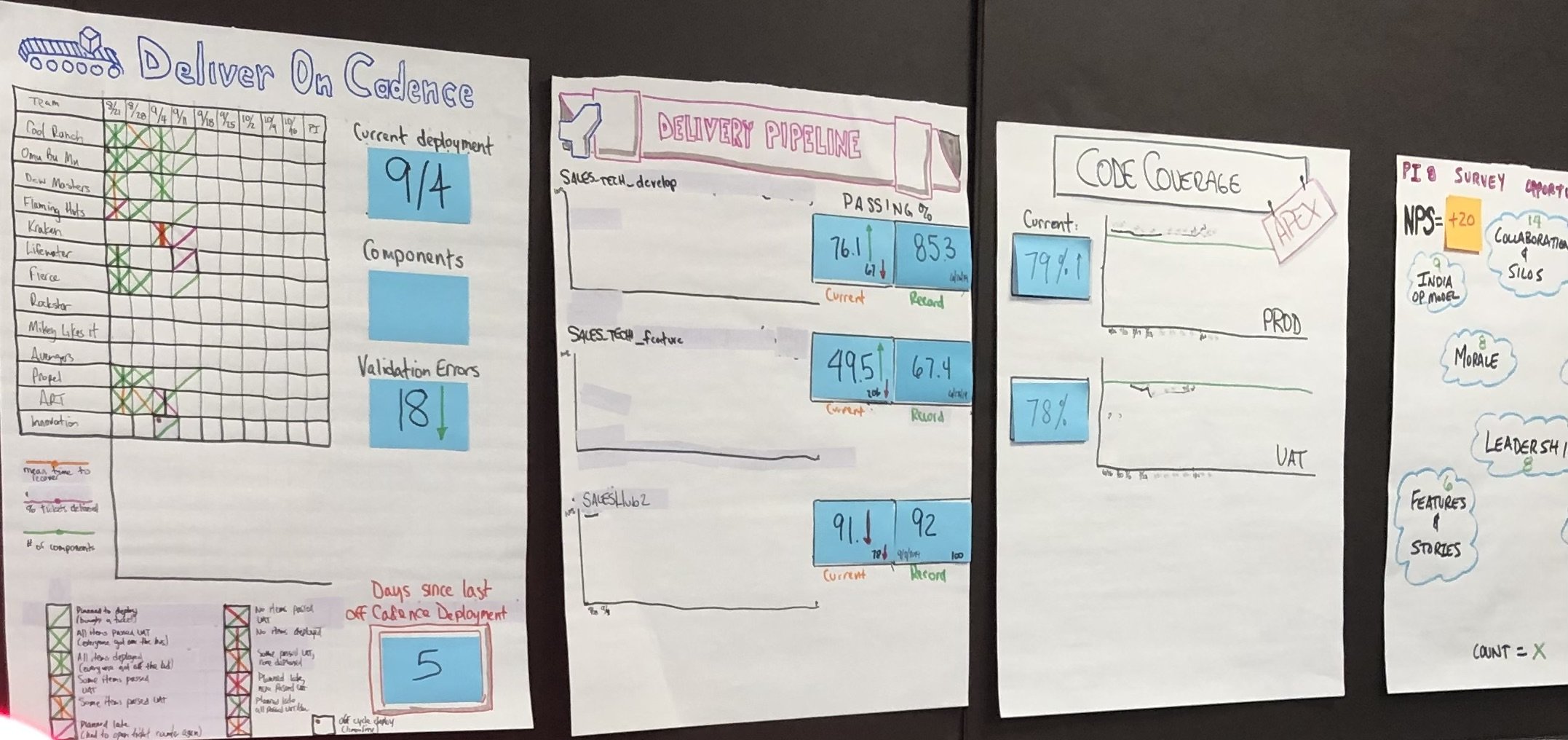
Three years later, this organization has transformed how it delivers digital solutions. The most significant impact: deployment frequency increased from quarterly releases to weekly releases — going from just four times a year to 52.
Note: This was one of the biggest impacts we made to the organization. When we began engaging with the larger enterprise, we provided extensive SAFe training—certifying over 520 people across five continents. In our training sessions, this achievement often left participants skeptical. How could teams release every week while navigating a change management and governance process that typically took weeks or even months? The answer: a relentless focus by dedicated DevOps teams. They systematically identified and removed impediments, collaborating with Change Management, auditors, and governance bodies to modernize processes and policies. This allowed for frequent, reliable releases while maintaining appropriate risk controls.
In addition to focusing on deployments, we also measured flow and predictability. Cycle time was cut almost in half — reduced from 180 days to 70 days. We achieved an average program predictability of 85% over multiple PIs.
And no more projects were canceled. During our engagement, we supported several successful high-stakes launches, including a contract management solution deployed in record time and the delivery of a major eCommerce platform that met an immovable deadline.
The final satisfying outcome? Industry recognition. Senior leaders from the organization were invited to present their success story at the 2019 SAFe Summit (a prominent industry conference), showcasing their journey and lessons learned.
Lessons Learned
Top-down leadership support is critical — executives must actively engage and support employee training efforts.
Coaching is essential early on — heavy investment at launch, then adjust as teams mature.
Certifications alone don’t drive change — coaches are needed to reinforce agile behaviors daily.
Invest in value stream identification and team design — get the structure right early.
Resist the urge to customize — by selecting an industry-leading framework, the client was able to onboard contractors who were already trained in the framework, avoiding delays and additional training costs.
Vendors must align with your approach — own your framework and hold them accountable.
Minimize component teams — build cross-functional teams that deliver end-to-end value.
UX matters — dedicated UX roles at every level (Portfolio, Program, Team) drive adoption and success.
Conclusion
By shifting from a project-based model to a product-driven, value-stream-aligned, and agile-at-scale approach, this organization not only avoided another costly failure but also built an agile delivery engine that enables it to adapt to business needs at speed. With weekly releases, reduced cycle times, and a thriving culture of agility, the organization is well-positioned to drive digital innovation for years to come.
Client Perspectives
“Confidence is building & the agility muscle is getting stronger.”
“We’ve made big strides in decreasing our cycle time.”
“We never could have come this far with Waterfall.”
“We set out to make change and I totally believe we have done that. We have created positive disruption…we have pushed back on unwritten rules…we have challenged norms.”
About Springbach
Springbach Consulting is a provider of niche services aimed at building your internal capabilities to generate quick wins, overcome barriers, and anchor agile principles into your culture.
